
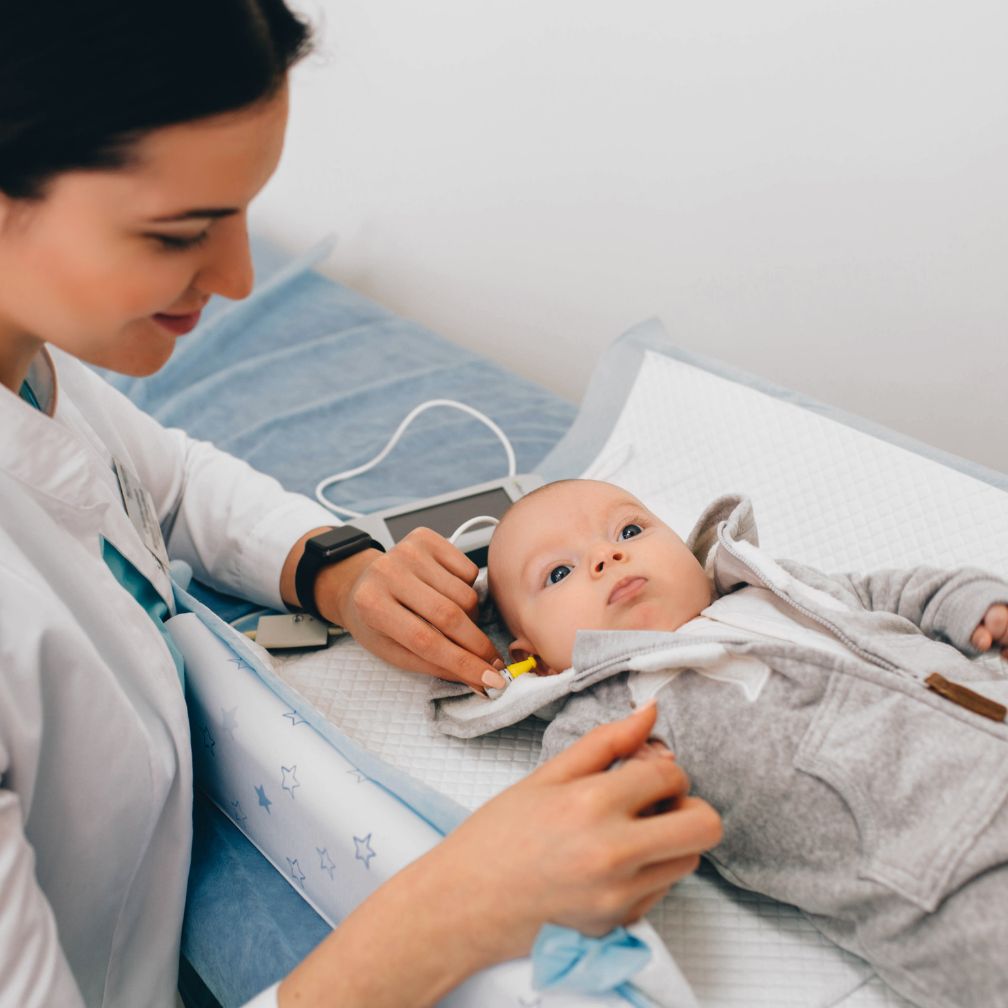
For mothers and fathers with newborns, learning that their baby has hearing loss often feels deeply disheartening and sad. Yet the optimistic truth is that via rapid screening and support, young children facing auditory deficits will achieve profound developmental success. In fact, such infants can acquire language, communication skills, and strong connections with the world around them, creating the foundation for a vibrant, rewarding life!
Two of the most effective tools for supporting infants with hearing loss include custom hearing aids and cochlear implants. In the following segment, we detail their individual operations and outline how to find the ideal match for your infant.
Unpacking the Foundations of Infant Hearing Loss
Hearing impairment across young infants frequently stems from multiple potential origins, including:
- Genetic factors (even without a documented family history)
- Specific congenital infections like cytomegalovirus (CMV) or German measles
- Birth-related trauma, featuring neonate oxygen loss or premature delivery
- Selected pharmaceutical treatments administered within hospital neonatal units
What remains the single most critical task? Prompt diagnostic confirmation. Because of these standards, babies cared for in United States nurseries receive auditory evaluations prior to heading home. Dedicated pediatric hearing specialists strictly observe the established “1-3-6” care guideline:
- Completely screened by 30 days of life
- Officially diagnosed within 3 months of age
- Specialized treatment (incorporating clinical devices or speech therapy) launched prior to 6 months post-birth
Meeting these clinical targets gives infants optimal support for normal speech, expressive language, and intellectual growth. If you need guidance on these screenings, your pediatrician will be happy to help!
Infant Hearing Aids: Overview & Benefits
When treating infants affected by mild to severe hearing loss, prescription hearing aids generally function as the primary intervention pathway. Such small, wearable instruments elevate environmental sound levels, helping infants perceive spoken dialogue and surrounding sounds with greater clarity.
Advanced pediatric hearing aids operate as:
- Completely safe for infants as young as a few weeks old
- Built with soft, flexible ear impressions that adapt smoothly during physical growth
- Equipped with tamper-proof battery doors and specialized pediatric safety components
- Uniquely adjusted by a pediatric hearing professional to align with your baby’s unique hearing profile
As your baby grows, their hearing devices necessitate routine recalibration to preserve physical comfort and functional efficacy.
Advanced Surgical Solutions: Infant Cochlear Implants
If a young child displays severe to profound sensorineural deficits and receives minimal relief from hearing aids, a cochlear implant stands as a primary recommendation. Unlike external acoustic hearing aids, cochlear implant devices:
- Need a targeted surgical procedure for final insertion to enable direct neural stimulation
- Completely bypass compromised regions within the auditory system
- Convert sound into electrical signals that activate the hearing nerve directly
Modern cochlear implant systems operate as:
- Formally FDA-sanctioned for implementation in infants starting at 9-12 months of age
- Deeply effective when combined with early auditory-verbal therapy and strong home support
- Sanctioned strictly following an exhaustive clinical assessment by an audiologist alongside an ENT physician
That multi-step journey involves radiological imaging, hearing tests, and detailed consultations regarding anticipated long-term progress.
Hearing Aids Versus Cochlear Implants: A Direct Comparison
- Mild to severe auditory decline uses Hearing Aids; Severe to profound hearing loss necessitates Cochlear Implants
- Non-Invasive: Hearing Aids; Invasive surgical procedure: Cochlear Implants
- Sound processing amplification: Hearing Aids; Digital electrical impulse transformation: Cochlear Implants
- Fitting starts at early infancy: Hearing Aids; Placement starts at 9-12 months: Cochlear Implants
Hearing Aids vs. Cochlear Implants: Final Thoughts
Should your baby receive a formal hearing loss diagnosis, you can rely on excellent technological options and dedicated care teams are available. With the help of pediatric hearing specialists, most children construct speech and language proficiency that rivals their normal-hearing peers.
No matter if your infant proves better suited for conventional hearing aids or advanced cochlear implants, early management creates a profound lifelong advantage.
Do you need professional advice regarding your baby’s current hearing health? Call our clinic today to receive a complete diagnostic assessment and personalized rehabilitation plan.